€3.99
Reference: 1232


Japanese maple, also known as momiji, Acer palmatum atropurpureum in Latin, is a tree that belongs to the Aceraceae family. It is an Asian variety characterized by its spreading form and height ranging from 3 to 8 meters. Its growth is slow, but it has a long lifespan that can reach several decades.
It blooms in spring, from April to May, producing reddish to purple flowers that do not emit any particular scent.
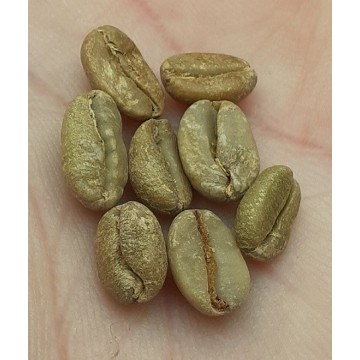
Seeds of the Japanese maple are on average 5 millimeters in length and are oval in shape. They have a dark brown to light brown color, with a smooth and slightly shiny texture. They are harvested as early as October.
Its fruits are samaras, averaging 2 centimeters in length, dark brown in color, also known as helicopter seeds because they easily fly away with the wind while spinning, allowing them to reproduce in more distant areas.
This tree has bright red foliage, finely dissected and small in size, which starts to grow from the beginning of spring. Its leaves then fall as early as November, forming a beautiful vegetal carpet.
A Jewel of Zen Landscaping
The Japanese Maple is a prestigious ornamental species, celebrated for its elegant habit and its changing foliage that enhances Japanese-inspired gardens.
A true centerpiece of contemporary green spaces, this deciduous tree offers a flamboyant chromatic display, evolving from tender green to purple-red throughout the seasons.
Pot Cultivation and Terraces
Thanks to its non-invasive root system and its graphic silhouette, Acer palmatum atropurpureum is the ideal candidate for container cultivation on balconies or shaded patios.
This heather-soil plant requires a draining and acidic substrate to thrive sustainably, thus offering a high-end aesthetic solution to restricted urban spaces.
Master of the Art of Bonsai
The Japanese maple is an emblematic species in the discipline of bonsai, prized for the fineness of its twigs and the delicacy of its deeply lobed leaves.
Its high tolerance to structural pruning allows enthusiasts to shape spectacular miniature subjects, thus perpetuating an ancient art combining patience and horticultural mastery.
This variety must be planted in well-aerated substrate with an acidic pH; the ideal is to use heather soil.
It grows in a sunny to partially shaded environment.
It is a very hardy tree, easily withstanding very harsh winters with temperatures dropping to -15°C.
It requires regular watering if grown in a pot; watering twice a week seems sufficient. For ground cultivation, water well at planting, and during heatwaves; otherwise, the tips of the leaves may dry out.
The best method of reproduction is sowing. It is also possible to reproduce it by softwood cuttings at the end of summer.
It is sometimes attacked by scale insects or aphids if grown indoors. In open ground, it can occasionally be subject to powdery mildew, a fungus that causes its foliage to appear whitish.
Regularly prune it from October to the end of December to maintain its beautiful shape. If the tree has dead branches, they should be removed as soon as possible, just above a healthy bud. To revitalize a weak plant, it is recommended to mulch its base with pine bark.
This article was written by Julien on 07/09/2026.
Your review appreciation cannot be sent
Report comment
Report sent
Your report cannot be sent
Write your review
Review sent
Your review cannot be sent
Reference: 1232
Reference: 1167
Reference: 1232

check_circle
check_circle