


Reference: 1232


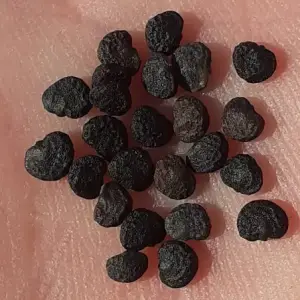

Jimsonweed, also known as Thorn Apple or Datura stramonium, is a fast-growing, shamanic, and very hardy herb. It is an annual plant from the Solanaceae family. Its origins trace back to several regions, notably the Americas, where it is native. It generally reaches a height of 60 to 80 cm.
Its highly fragrant leaves are wide, heart- or lance-shaped, and can reach up to 20 centimeters in length. They are deep green with a smooth texture and serrated edges. The spectacular, trumpet-shaped flowers measure up to 25 cm long and usually open in the late afternoon or evening, releasing a sweet, captivating scent. They are white, solitary, and stand proudly above the foliage.
The fruits are prickly capsules that form after flowering. These green capsules can reach the size of a tennis ball and contain numerous black seeds.
Jimsonweed seeds are black, slightly flattened, very resistant, and average 2 to 4 millimeters in diameter.
It possesses numerous medicinal properties valued for a long time despite its high toxicity. It can be applied directly to the skin depending on the condition being treated. Some cultures worldwide use it for spiritual, esoteric, or shamanic rituals to induce altered states of consciousness (notably in the Americas for healing rituals or "underworld" journeys).
Because this variety is extremely toxic, it must be handled with great caution. It is used in pharmacology for its powerful compounds. Nevertheless, it remains a beautiful ornamental plant; however, it should be kept out of reach of children and animals.
It grows in well-drained soils, whether rich or poor in organic matter. While it adapts to various soil types, a light and mineral potting mix promotes better development.
This herb thrives in sunny exposures and develops best under direct light. A full sun location is recommended to maximize flowering.
It grows in temperate climates and prefers warm temperatures, generally between 20 and 30°C. It does not tolerate frost and must be protected from temperatures below 0°C.
Water needs are moderate. Regular watering is necessary, especially during heatwaves, but it is important to avoid excess water which can lead to root rot.
Its primary mode of reproduction is by seeds. Propagation by cuttings is also possible but less common.
It can be prone to various pests, including aphids, spider mites, and slugs. Fungal diseases may also affect the foliage, especially in cases of excessive humidity.
Your review appreciation cannot be sent
Report comment
Report sent
Your report cannot be sent
Write your review
Review sent
Your review cannot be sent
Reference: 0247
Reference: 0195

check_circle
check_circle


