


- Out-of-Stock

Reference: 1232


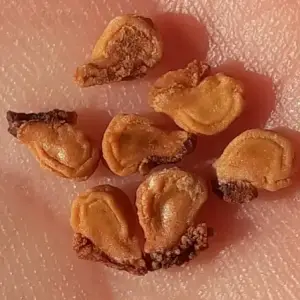

Purple Datura, also known as purple devil's trumpet, is an annual plant from the Solanaceae family, native to Asia. It has an aesthetic, bushy habit and reaches about 60 cm in height. This ornamental variety is highly elegant and much sought after by collectors.
Its foliage consists of large, alternate, oval leaves that are slightly asymmetrical at their base. They display a deep dark green hue, often tinged with violet or even bluish reflections, especially on the veins and the stems, which are an almost black-purple. The leaf margins are irregularly toothed or wavy, releasing a strong and characteristic odor when crushed.
The flowers are true trumpets pointed toward the sky, often reaching 15 to 20 cm in length. The purple variety is particularly prized for its "double" or "triple" flowers, where several corollas fit inside one another. The exterior of the flower is an intense violet, while the interior is a brilliant pure white. They open in the late afternoon and exhale a sweet and bewitching fragrance throughout the night.
The fruit is a globular capsule, green at first and then turning brownish-purple as it dries. It is covered with small tubercles or blunt spikes. At maturity, the capsule opens irregularly to release the seeds.
Purple devil's trumpet seeds are flat, light brown, and extremely resilient, capable of remaining viable in the soil for several years. Like the rest of the plant, they contain a high concentration of alkaloids, making them highly toxic if ingested.
Its spectacular and highly decorative flowering is the main attraction of this ornamental plant. Its trumpet-shaped corollas and vibrant colors bring a magnificent exotic touch to gardens. It can easily serve as a centerpiece in exotic garden compositions or flower beds. Its ornamental qualities also make it ideal for cultivation in pots or containers on terraces and patios.
Purple Datura has been used in various countries worldwide. Formerly, it was employed by the Aztecs and Native Americans as a medicinal plant for healing and rituals. In India, it is still used for its therapeutic properties.
Do not consume for psychoactive or medicinal effects; cultivate solely for the preservation of the botanical species.
This particularly hungry plant requires rich, deep soil well-supplied with organic matter. A mix of quality garden soil and well-decomposed compost supports its rapid development and generous flowering.
The Purple Datura metel requires full sun to produce its most beautiful colors and large flowers. Maximum luminosity is essential for the stems to maintain their characteristic dark purple hue and to encourage the opening of flower buds. In the hottest regions, it easily tolerates scorching exposure.
Native to tropical zones, this Datura is a frost-sensitive plant that absolutely cannot tolerate negative temperatures. In temperate latitudes, it is generally grown as an annual or as a greenhouse plant. It begins to decline as soon as temperatures consistently drop below 10°C and disappears completely at the first frost.
Due to its broad foliage and vigorous growth, watering must be abundant and very regular throughout the summer season. The substrate should remain moist but not waterlogged, as a lack of water quickly causes leaves to wilt and flower buds to drop prematurely. Mulching at the base of the plant is highly recommended to retain soil moisture during heatwaves.
Propagation is very easily achieved by seed. It is also possible to take stem cuttings in late summer, although sowing remains the most common and productive method for this species.
Your review appreciation cannot be sent
Report comment
Report sent
Your report cannot be sent
Write your review
Review sent
Your review cannot be sent

check_circle
check_circle


